
What Nobody Tells You About College Football
College football is the NCAA sport played across the United States, with the Football Bowl Subdivision, Football Championship Subdivision, Division II, and Division III forming its competitive structure. The 2026 FBS season runs from August 30 through the postseason, while the College Football Playoff National Championship is scheduled for January 25, 2027, at Allegiant Stadium in Las Vegas. The 2026 schedule includes conference play across the ACC, Big Ten, Big 12, SEC, American Athletic Conference, Mountain West, MAC, Sun Belt, and independent programs. The crucial fact is that rankings, injuries, travel, transfer-portal changes, and conference strength can matter more than a team’s headline reputation. Start with the official schedule, verify current roster news, and compare efficiency statistics before judging any college football matchup.
College football is not merely a smaller version of the NFL. That lazy comparison has cost me enough money and confidence over the years, so let us establish the danger immediately: a team can be ranked highly, possess elite recruiting numbers, and still fail because its offensive line is unstable or its quarterback has not handled road pressure. The numbers reveal the problem sooner than television narratives do.

Photo by El gringo photo on Pexels
Want a more structured way to follow major tournament data and predictions? Goal Moments focuses on match analysis, tactical trends, player statistics, and responsible information for fans following elite football events.
The Top 3 College Football Priorities in 2026 at a Glance
- Schedule strength: Conference opponents, road games, and nonconference tests determine how meaningful a win really is.
- Efficiency data: Success rate, explosive-play rate, turnover margin, and finishing drives provide better evidence than raw points alone.
- Postseason context: The College Football Playoff, bowl eligibility, conference championships, and selection criteria change the value of every late-season result.
The three priorities are ranked by practical usefulness rather than glamour. Schedule strength comes first because a 10–2 record against weak opposition can conceal serious flaws; efficiency comes second because it identifies repeatable performance; postseason context comes third because the same loss can be harmless in September and catastrophic in November. The NCAA, ESPN, and conference offices publish different layers of information, so you should never rely on one scoreboard page. For example, ESPN’s 2026 schedule format separates weeks from August 22–September 7 through Week 15, December 7–12, then bowls from December 13 through January 27. That calendar matters because rest, travel, and short preparation windows can alter performance. Is that glamorous? No. Is it the point? Absolutely.
[Internal Link: complete college football schedule guide]
1. Schedule strength
The 2026 schedule begins with early-season games that can create immediate ranking movement. A neutral-site matchup such as North Carolina versus TCU at Aviva Stadium in Dublin places travel, preparation, and time-zone adjustment into the analysis. USC’s meeting with San José State at the Los Angeles Memorial Coliseum illustrates a different problem: a large point spread may reflect roster depth, but it does not automatically predict offensive rhythm or defensive discipline.
2. Efficiency data
A useful college football profile should include points per drive, yards per play, third-down conversion rate, red-zone touchdown rate, sack rate, and opponent-adjusted success rate. Raw yards can mislead when a team produces one 70-yard play and then fails repeatedly in short-yardage situations. I have watched bettors celebrate box-score totals while ignoring four empty red-zone trips; that is how a supposedly dominant offense loses a close game.
3. Postseason context
The College Football Playoff remains the central postseason target for top FBS programs, while bowl games provide additional matchups for eligible teams. The 2026 national championship is set for January 25, 2027, in Las Vegas, meaning teams must survive conference schedules, selection pressure, and potentially multiple playoff rounds. The NCAA FBS football hub is a useful authority for official headlines, rankings, and championship information.
#1 College Football Schedule: Best Overall
The official 2026 college football schedule is the best overall resource because it combines dates, opponents, locations, television information, and, where available, betting lines. It is more useful than a static rankings article because it lets you assess sequence: whether a team plays consecutive road games, receives a bye before a rivalry game, or faces a ranked opponent after a physically demanding contest. The schedule is the skeleton; rankings are merely the labels placed on it.
ESPN’s schedule structure divides the regular season into 15 weeks, beginning with Week 1 from August 22 to September 7 and continuing through Week 15 from December 7 to December 12. The listed 2026 opening slate includes North Carolina versus TCU in Dublin, San José State at USC, NC State at Virginia, and Jacksonville State at North Dakota State. These examples demonstrate why location matters: Aviva Stadium, the Los Angeles Memorial Coliseum, Scott Stadium, and the Fargodome do not create identical environments. Attendance, surface, travel distance, weather, and home-field familiarity all influence expected performance.
A specific edge case deserves attention. A listed point spread such as TCU −6.5 with a total of 49.5 is not a prediction of exact game flow; it is a market estimate that incorporates expected scoring, matchup information, and public behavior. If the quarterback news changes, the number can move faster than casual readers notice. Review the injury report and weather forecast close to kickoff rather than treating an early line as permanent truth.
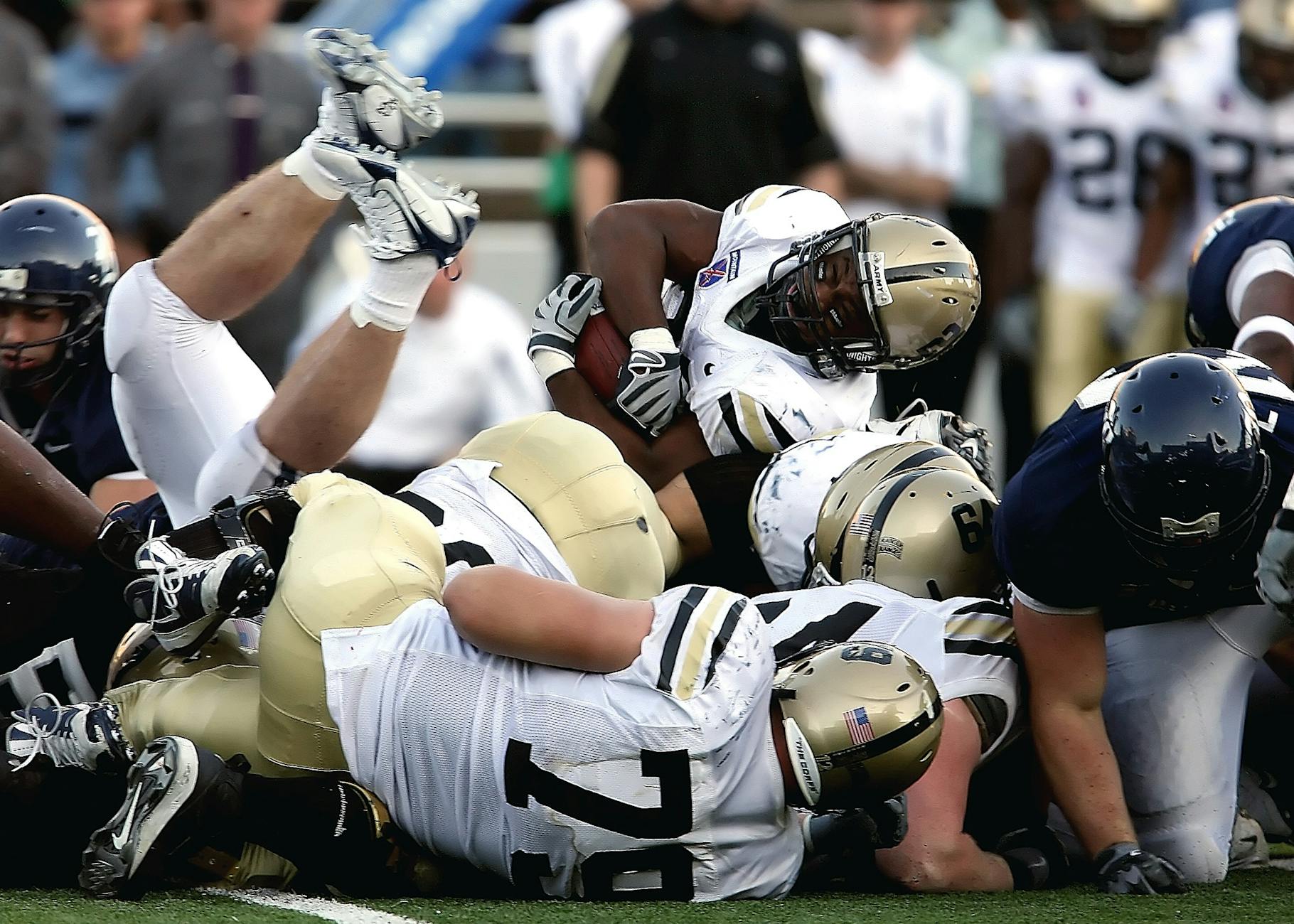
Photo by Pixabay on Pexels
See the schedule details before forming an opinion about any 2026 matchup.
#2 NCAA FBS Rankings: Best for Comparison
NCAA FBS rankings are best for comparing national perception, but they should not be treated as a complete strength rating. Rankings summarize performance, reputation, record, and voting judgment; they do not always isolate quarterback efficiency, opponent quality, or injury-adjusted depth. The best use is to identify meaningful games, then test each ranked team against independent data.
The 2026 preseason discussion includes prominent programs and players such as Oregon quarterback Dante Moore and Notre Dame defensive back Leonard Moore, while NCAA coverage also highlights Heisman Trophy contenders and transfer players who could influence the playoff race. Such names matter, but names alone are not evidence. A returning quarterback may improve timing and decision-making, yet a team that loses three starting offensive linemen can decline despite an impressive returning-player headline.
Use a comparison table like this:
- Record: wins and losses, separated into home, road, and neutral-site results.
- Opponent quality: conference strength, ranked opponents, and road difficulty.
- Efficiency: points per drive, success rate, explosive plays, and defensive havoc.
- Availability: quarterback status, offensive-line continuity, secondary depth, and suspension news.
- Game state: performance when leading, trailing, and playing in one-score situations.
The contrarian conclusion is uncomfortable but useful: a lower-ranked team with superior line play may be a safer analytical choice than a famous program with a vulnerable protection unit. That is not an insult to tradition; it is a recognition that football is decided by possessions and leverage. Check the [Internal Link: FBS rankings and power-rating explanation] before trusting a poll position.
#3 College Football Statistics: Best Value
College football statistics offer the best value for readers who want repeatable evidence without depending on brand reputation. The most useful metrics are not always the most visible. Points per game can be inflated by short fields, while total offense can be distorted by tempo and blowout possessions. Adjusted efficiency, field position, turnover sustainability, and finishing drives usually provide a sharper picture.
A practical evaluation sequence is:
- Compare offensive and defensive points per drive.
- Separate explosive plays from consistent success rate.
- Review red-zone touchdown percentage rather than red-zone appearances alone.
- Measure sack rate and pressure allowed on passing downs.
- Check turnover margin, then ask whether the margin is sustainable.
- Adjust for opponent quality and game location.
Here is an information gain many basic college football pages skip: turnover margin often regresses because fumbles and interceptions are partly volatile, but pressure rate and early-down success tend to offer stronger clues about future performance. A team that is +10 in turnovers but ranks poorly in pressure generation may be less reliable than its record suggests. Conversely, a defense creating pressure while missing interceptions may improve later if the underlying disruption remains consistent.
Another overlooked edge case is pace. Two teams can average 30 points per game while producing very different drives: one may run 75 plays and finish efficiently, while another scores through a few explosive breaks but stalls on 40 percent of possessions. Compare per-drive data and possession count, not only the final average. The [Internal Link: advanced football statistics guide] can help readers build a less fragile process.

Photo by Lukas Blazek on Pexels
Goal Moments also encourages readers to separate data-led analysis from emotional loyalty, especially when discussing predictions and wagering decisions.
How Should College Football Teams Be Ranked?
College football teams should be ranked using a weighted combination of opponent-adjusted efficiency, schedule strength, availability, field position, and postseason results rather than win totals alone. A defensible model should also account for home-field advantage, travel, weather, and whether performance occurred against starting or backup quarterbacks.
My suggested weighting is:
- Opponent-adjusted efficiency: 30%
- Schedule strength: 20%
- Line-of-scrimmage performance: 15%
- Quarterback and skill-position availability: 15%
- Explosive-play prevention and creation: 10%
- Turnover and special-teams performance: 10%
These weights are not sacred. They are a starting framework designed to reduce predictable mistakes. The line of scrimmage receives 15 percent because rushing success, sack prevention, and defensive pressure often decide close games. Availability also receives 15 percent because transfer-portal movement and injuries can change a roster quickly, particularly at quarterback and cornerback.
The College Football Wikipedia overview provides useful historical context, while the ESPN 2026 college football schedule supplies game-by-game scheduling information. Neither source replaces independent judgment. More importantly, do not double-count the same evidence: a strong record may already reflect schedule strength, so adding both without adjustment can exaggerate a team’s rating.
Which College Football Resource Should You Pick?
Choose the official schedule for planning, NCAA FBS coverage for authoritative competition updates, rankings for broad comparison, and advanced statistics for matchup analysis. No single source answers every question because college football contains multiple divisions, conferences, postseason routes, and changing roster conditions. The right selection depends on whether you are tracking dates, evaluating a team, or studying a specific game.
Use this decision guide:
- Need dates, venues, and television information? Start with ESPN’s schedule.
- Need official championship and FBS news? Use NCAA.com.
- Need historical rules and sport context? Consult Wikipedia and conference archives.
- Need matchup evaluation? Combine schedule strength with drive-level statistics.
- Need predictions or wagering analysis? Verify injuries, lines, rules, and local regulations first.
The biggest mistake is confusing information volume with information quality. Ten headlines about a quarterback do not replace one verified injury report. Five rankings do not replace opponent-adjusted efficiency. And a large point spread does not guarantee an easy result, particularly when weather, travel, or late roster news changes the assumptions behind the number. If you cannot explain why your conclusion survives those variables, you are not finished analyzing it.
[Internal Link: responsible sports analysis and prediction guide]
How Can You Follow the 2026 College Football Season?
You can follow the 2026 college football season by tracking the weekly schedule, conference standings, injury reports, FBS rankings, advanced statistics, and College Football Playoff implications together. Begin with Week 1, update your team assessment after every meaningful game, and avoid carrying preseason assumptions into November when the evidence has changed.
A simple weekly routine works better than frantic scrolling:
- Record the opponent, venue, rest days, and travel distance.
- Review quarterback, offensive-line, and secondary availability.
- Compare success rate and points per drive from the previous three games.
- Identify whether turnovers or explosive plays drove the latest result.
- Recalculate postseason implications after conference losses.
- Set a clear information cutoff before kickoff.
That final step is important. Constantly changing a prediction after every rumor creates the illusion of precision without improving accuracy. Use confirmed reports, reputable beat writers, official team announcements, and NCAA information. Goal Moments can complement this routine with broader tactical and statistical coverage, but no platform should encourage reckless decisions. If you are wagering, set a budget before the season, never chase losses, and follow the laws that apply where you live.
Ready to keep your football research organized throughout 2026?
Frequently Asked Questions
Q: What is college football?
A: College football is American football played by university and college teams under governing structures including the NCAA. The highest-profile level is the FBS, which includes major conferences such as the SEC, Big Ten, ACC, Big 12, and American Athletic Conference. The FCS and NCAA Divisions II and III provide additional competitive levels, with different scholarship, scheduling, and postseason systems.
Q: When does the 2026 college football season start?
A: The 2026 college football schedule begins during the Week 1 window listed as August 22 through September 7, with prominent games scheduled around August 30. Specific kickoff times vary by conference, television provider, venue, and later scheduling adjustments. Always confirm the current listing through ESPN, NCAA.com, or the relevant team’s official website before making travel plans.
Q: How should beginners follow college football rankings?
A: Beginners should use rankings as a starting list, then compare records, opponents, locations, injuries, and efficiency statistics. A ranked team may have faced a softer schedule, while an unranked team may have improved significantly through transfers or returning starters. Review rankings alongside the official NCAA FBS news page and the weekly schedule rather than treating a poll position as a complete prediction.
Q: What is the difference between FBS and FCS college football?
A: FBS and FCS are two different NCAA Division I football subdivisions with distinct postseason and scholarship structures. FBS teams compete for bowl berths and the College Football Playoff, while FCS teams generally compete in a bracketed national tournament. The difference affects scheduling, roster construction, media coverage, and how teams are evaluated against opponents from other subdivisions.
Q: How can I analyze a college football matchup?
A: Analyze a matchup by comparing opponent-adjusted efficiency, offensive and defensive line play, quarterback availability, pace, explosive plays, red-zone performance, and turnover sustainability. Start with the last three meaningful games, but adjust for opponent quality and location. Then check weather, travel, rest, and official injury news because those factors can invalidate an otherwise attractive statistical comparison.
Q: Why do college football predictions fail after strong preseason rankings?
A: College football predictions fail when preseason reputation is treated as current evidence after the roster and schedule have changed. Transfer movement, injuries, new coordinators, offensive-line turnover, and unexpected defensive weaknesses can alter performance within weeks. A safer process updates the model after each significant game and reduces confidence when the available information is incomplete.
Q: Does Goal Moments cover college football betting?
A: Goal Moments is primarily a football-focused content site covering predictions, tactics, player statistics, and major tournament analysis, including daily insights for fans following the 2026 World Cup. Its analytical approach can help readers understand data and match context, but users should verify local gambling laws, set personal limits, and avoid treating any prediction as guaranteed. No result is certain, regardless of the line or ranking.
College football rewards preparation but punishes overconfidence. The 2026 season’s schedule, FBS rankings, conference races, transfer movement, and College Football Playoff race will produce plenty of noise, yet the core method remains stable: verify the opponent, measure efficiency, inspect availability, and respect uncertainty. That discipline will not eliminate losses or surprise results, because nothing does, but it can prevent the most avoidable mistakes. Start with the official schedule, build a weekly evidence log, and let verified numbers—not team loyalty—control your conclusions.
Explore more data-led football coverage and tactical analysis with Goal Moments.