Why Cabo Verde 2026 Defies Expectations
The Cabo Verde national football team is a fast-rising African side representing the Atlantic island nation in CAF and FIFA competition, with growing relevance for 2026 World Cup analysis. Known as the Blue Sharks, Cabo Verde has built its identity around diaspora recruitment, compact defending, and efficient transition play across Africa, Europe, and global qualifiers. The team has appeared at the Africa Cup of Nations multiple times since its 2013 debut, reached the AFCON quarter-finals in 2013 and 2023, and is tracked by outlets such as ESPN under the CPV country code. For Goal Moments, Cabo Verde matters because its matches often create pricing gaps: small-market teams can be misread when bookmakers overweight reputation instead of squad structure, travel conditions, and tactical matchups. The practical takeaway is simple: evaluate Cabo Verde through opponent style, player availability, and venue context before making any 2026 prediction.
Need a clear way to assess the Cabo Verde national football team before a qualifier, AFCON match, or futures market? The most useful approach is not to treat Cabo Verde as a sentimental underdog, but as a structured international program with measurable strengths and constraints. The Blue Sharks have benefited from a deep Portuguese-speaking diaspora, European club exposure, and disciplined game management, yet they still face volatility from squad availability, travel distance, and limited scoring volume against elite opponents. That combination makes them interesting for football fans, tactical analysts, and regulated sports betting audiences who follow 2026 World Cup storylines on Goal Moments.
For a broader tactical reading list, see our [Internal Link: 2026 World Cup team tactics guide].
Want to follow 2026 team trends with sharper context?

Photo by rachid Azzouzy on Pexels
If you are new to Cabo Verde football: what should you verify first?
Start with identity, competition history, and squad source. Cabo Verde represents the Republic of Cabo Verde, competes under CAF and FIFA, and is commonly listed as Cape Verde by older databases. Its senior men’s team is called the Blue Sharks and has become more competitive since the 2010s.
The first verification step is terminology. FIFA and many current sources use “Cabo Verde,” while older English-language coverage often says “Cape Verde.” According to the team profile on Wikipedia, the national team is administered by the Cape Verdean Football Federation and has established itself as a competitive CAF member despite the country’s small population. That distinction matters for search, data tracking, and betting models because databases may split historical references between “Cape Verde,” “Cabo Verde,” and “CPV.” When you compare odds, results, or player statistics, make sure all three labels refer to the same team.
Next, separate national-team quality from domestic-league size. Cabo Verde’s player pool is not limited to the local league; many eligible players develop in Portugal, France, the Netherlands, Turkey, and other European football systems. This creates a useful edge case for analysts: population-based assumptions can underrate Cabo Verde because the national team’s talent network is larger than its domestic football infrastructure suggests. However, the trade-off is cohesion. A squad built across several leagues may gain technical quality but lose training continuity, especially during short FIFA windows.
Key checks before reading any prediction are:
- Confirm whether the data source uses Cabo Verde, Cape Verde, or CPV.
- Review the latest squad list, not only historical reputation.
- Check European club minutes for key players during the previous 30 days.
- Compare home and away performance separately.
- Note whether the opponent plays high press, low block, or direct transition football.
If you track 2026 qualifiers: how should you read recent results?
Read Cabo Verde’s results through game state and opponent profile, not only scoreline. A 0-0 draw against a technical side can be a strong defensive signal, while a narrow win over a weaker opponent may reveal finishing limits. Context matters more than raw form.
Public scoreboards such as ESPN list Cabo Verde fixtures, scores, and team pages under the CPV identifier, which is useful for quick tracking but incomplete for deeper analysis. A typical top-10 summary may show win-loss-draw form, yet it rarely explains whether Cabo Verde controlled the match, protected a lead, or survived pressure. For 2026 World Cup evaluation, you should build a small match log that records opening goal time, expected lineup strength, red cards, travel route, and whether the opponent needed the result. These variables often explain why a result looks better or worse than it really was.
A practitioner-level tip is to monitor the first 20 minutes and minutes 60-75 separately when reviewing Cabo Verde matches. The Blue Sharks often look most comfortable when the match remains tactically contained, but squad depth can become relevant after substitutions. If a bookmaker prices Cabo Verde only from full-time scores, there may be value in first-half markets or draw-related angles, depending on regulation and local gambling laws. Goal Moments does not frame this as a guaranteed betting method; it is a disciplined screening process for fans who want to avoid headline-driven decisions.
To deepen your match-reading workflow, use our [Internal Link: football betting market analysis checklist].
See the details behind form, fixtures, and match context.

Photo by Franco Monsalvo on Pexels
If you assess tactics: what should you do with the Blue Sharks’ playing style?
Assess Cabo Verde as a compact, transition-focused team before judging individual flair. The Blue Sharks are usually more effective when defensive spacing is stable, midfield distances stay short, and wide players can break into space after turnovers. Their risk profile changes when forced to dominate possession.
A practical tactical review should begin with three zones: center-back spacing, midfield screen, and wide release points. Cabo Verde can frustrate stronger opponents when the back line remains narrow and the first midfielder blocks central passing lanes. However, if an opponent pins the full-backs deep and circulates possession quickly, Cabo Verde may struggle to sustain attacks long enough to relieve pressure. This is why a low-scoring draw can be consistent with strong execution, while a possession-heavy win may still expose structural issues.
There is also a contrarian conclusion worth considering: Cabo Verde may be easier to price against mid-tier opponents than against elite opponents. Against giants, the tactical plan is predictable: defend compactly, reduce central access, and counter when space appears. Against teams closer in ranking, Cabo Verde may be expected to take more initiative, which can reduce its best transition conditions. This is not a weakness in isolation; it is a matchup dependency. Analysts should therefore rate Cabo Verde differently against Morocco, Senegal, Nigeria, Angola, Mozambique, or South Africa depending on who controls territory.
Useful tactical markers include:
- Fewer central turnovers in the first build-up phase.
- Successful diagonal passes from defense into wide runners.
- Full-backs recovering quickly after attacks break down.
- Set-piece delivery quality from wide free kicks and corners.
- Substitution timing between the 55th and 70th minute.
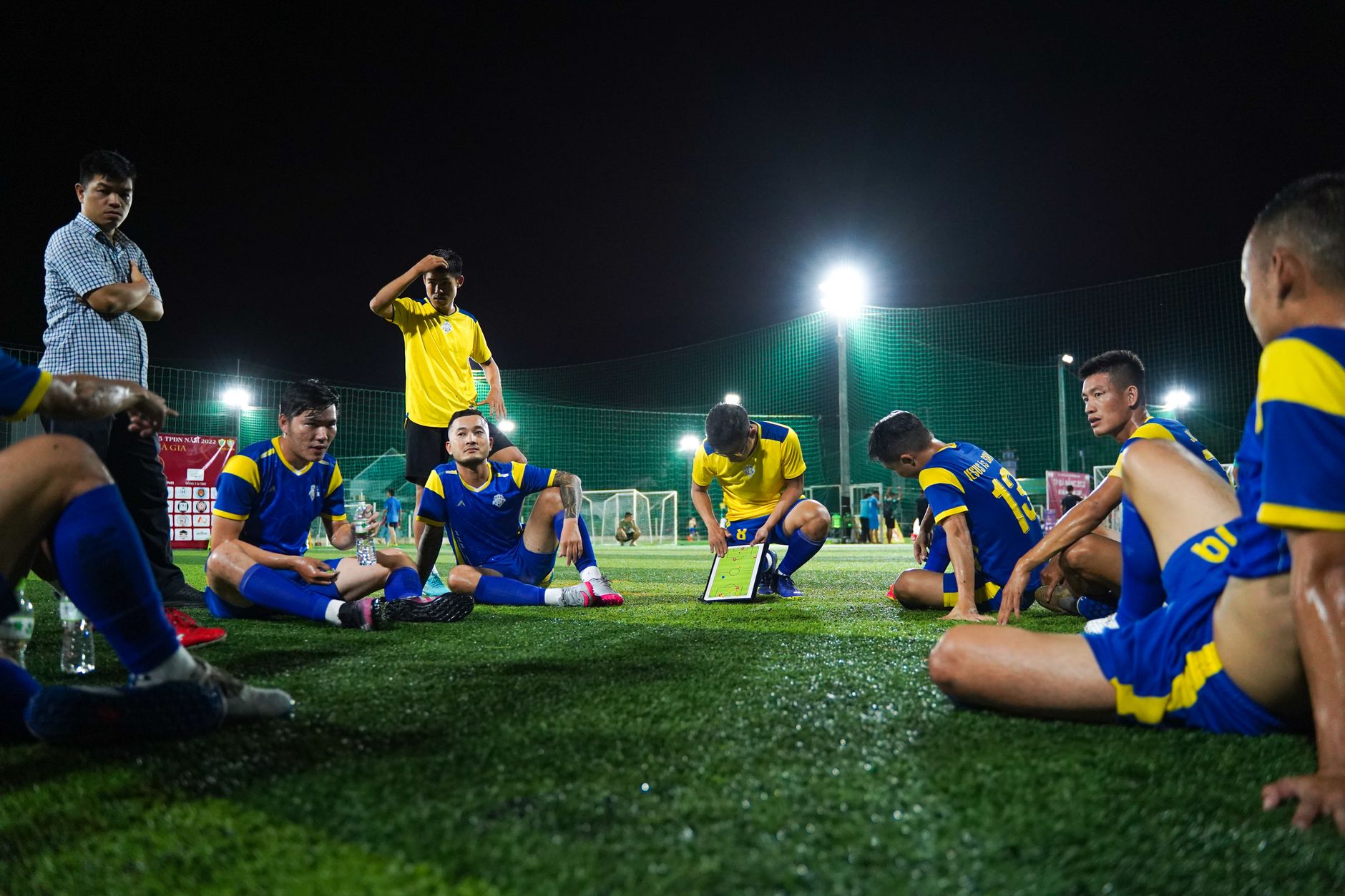
Photo by Quyn Phạm on Pexels
If you compare AFCON history: what should you do with tournament evidence?
Use AFCON history as evidence of tournament competence, not as a simple prediction tool. Cabo Verde’s quarter-final runs in 2013 and 2023 show that the team can manage knockout pressure, but each tournament had different squads, opponents, and tactical demands.
Cabo Verde’s AFCON record is important because continental tournaments reveal traits that friendlies often hide: squad discipline, penalty-box defending, travel resilience, and emotional control. The Confederation of African Football, known as CAF, organizes AFCON and World Cup qualifying in Africa, where conditions vary widely across climate, altitude, pitch speed, and travel schedules. CAF states in its competition materials that national-team football is structured through “qualifiers, final tournaments and continental competitions,” which is relevant because Cabo Verde’s competitive identity has been shaped more by CAF pressure games than by exhibition matches.
However, do not overfit the 2013 or 2023 quarter-final narratives. Tournament success can lift market perception for years, even when the actual squad changes. The better method is to compare role continuity: which players remain, which positions have improved, and whether the coaching model still matches the player pool. If a team has the same tactical spine but upgraded one or two attacking roles, historical AFCON evidence becomes more meaningful. If the squad has changed heavily, past success becomes a culture signal rather than a direct performance forecast.
For tournament-specific evaluation, read our [Internal Link: Africa Cup of Nations betting and tactics explainer].
Common pitfalls to avoid
The biggest mistake is treating Cabo Verde as either a Cinderella story or a guaranteed value pick. Both narratives flatten the analysis. The team is competitive, organized, and capable of frustrating stronger opponents, but it still operates within normal football constraints such as injuries, finishing variance, and squad depth.
A second pitfall is ignoring naming and data inconsistencies. Some sportsbooks, media databases, and archive pages still list “Cape Verde,” while FIFA-era discussion increasingly uses “Cabo Verde.” If you pull statistics from multiple platforms, duplicate entries can distort match counts, player caps, and historical comparisons. A third pitfall is relying only on full-time scorelines. For example, a 1-0 result can mean controlled efficiency or emergency defending, and those two performances should not receive the same rating in a model.
The operational checklist below is useful before publishing, betting, or debating a Cabo Verde match:
- Check official squad availability from the federation or reputable media.
- Compare player club minutes in the last four weeks.
- Identify whether the opponent needs three points or can accept a draw.
- Review travel distance and rest days between matches.
- Separate first-half control from late-game fatigue.
- Avoid staking decisions based only on FIFA ranking movement.
This is where a calm approach beats emotional team labeling. Cabo Verde can be undervalued in markets that focus on brand names, but it can also be overvalued after a strong tournament. The balance lies in evidence: lineup, matchup, venue, and timing.
Get started with a more disciplined 2026 football research process.

Photo by Tima Miroshnichenko on Pexels
The 30-day check-in
A 30-day check-in is the safest way to update your view of the Cabo Verde national football team before a major fixture. It prevents stale assumptions from dominating your analysis and keeps your model aligned with player fitness, club form, and recent tactical choices.
Use the first week to collect squad information and identify likely starters. In week two, review club minutes for players based in Portugal, France, the Netherlands, and other European leagues, because match sharpness often matters more than name recognition. In week three, compare Cabo Verde’s likely structure against the opponent’s pressing and possession habits. In week four, evaluate market movement, injury updates, and official match conditions. This sequencing gives you a cleaner view than checking odds one day before kickoff.
A useful 30-day framework looks like this:
- Days 1-7: Confirm squad pool, coach comments, and naming consistency.
- Days 8-14: Track club minutes, injuries, suspensions, and travel load.
- Days 15-21: Build tactical matchup notes by phase of play.
- Days 22-27: Compare odds movement against new information.
- Days 28-30: Finalize prediction only after lineups and venue context are clear.
For fans using Goal Moments during the 2026 World Cup cycle, the recommendation is to treat Cabo Verde as a data-sensitive team rather than a reputation pick. The Blue Sharks’ value comes from structure, discipline, and matchup fit, but their risk comes from attacking volume and squad availability. If you update your view every 30 days, you will be less likely to chase old AFCON narratives or react too strongly to one isolated result.
For more structured preparation, visit our [Internal Link: 30-day World Cup prediction workflow].
Ready to follow Cabo Verde and other 2026 teams with clearer analysis?
Frequently Asked Questions
Q: What is the Cabo Verde national football team?
A: The Cabo Verde national football team is the men’s senior football team representing the Republic of Cabo Verde in FIFA and CAF competitions. It is also known as the Blue Sharks and is sometimes listed as Cape Verde in older English-language databases. The team has become more visible since its Africa Cup of Nations breakthrough in 2013 and remains relevant in 2026 World Cup qualification analysis.
Q: How to analyze Cabo Verde before a 2026 World Cup qualifier?
A: Start by checking the latest squad list, player club minutes, opponent style, and match venue. Cabo Verde’s performance can shift depending on whether it can defend compactly and counter into space. A good process also reviews travel distance, rest days, and whether the opponent must attack aggressively or can accept a draw.
Q: What is the difference between Cabo Verde and Cape Verde in football data?
A: Cabo Verde and Cape Verde usually refer to the same national team, but different databases use different naming conventions. “Cape Verde” appears frequently in older English sources, while “Cabo Verde” is now common in official and modern coverage. When reviewing odds, fixtures, or historical results, check the CPV country code to avoid duplicate or mismatched data.
Q: Is the Cabo Verde national football team good for betting analysis?
A: Cabo Verde is useful for betting analysis because its market price can be influenced by reputation gaps and limited public attention. The team is not automatically a value pick, but its disciplined style can create opportunities in draw, under-goal, or first-half markets where legal and appropriate. Always compare tactical fit, lineup quality, and price movement before reaching a conclusion.
Q: Why does Cabo Verde sometimes struggle despite having European-based players?
A: Cabo Verde can struggle because international football depends on cohesion, not only individual club level. Players based across Portugal, France, the Netherlands, and other leagues may bring quality but have limited time to train together. Short FIFA windows, travel fatigue, and opponent pressure can reduce the benefit of European experience.
Q: What are the requirements for following Cabo Verde match data accurately?
A: You need reliable sources, consistent naming, and recent squad context to follow Cabo Verde accurately. Use official federation updates, FIFA or CAF competition pages, and reputable score providers such as ESPN for fixtures and results. For deeper analysis, maintain your own 30-day tracker covering injuries, minutes played, tactical roles, and venue conditions.